 RondoTrace
Satellite monitoring compared with supplier audits, certifications and questionnaires
Last updated:
In short
Audits, certifications and questionnaires tell you what a supplier says and what a visitor saw on one day. Satellite monitoring tells you what physically changed at the site between those days, without the supplier taking part. RondoTrace provides the second kind of evidence, and it is used alongside the first because each sees things the other cannot.
What each method is
An audit is a visit by a person who can read documents, talk to staff and walk through a plant. A certification is a standard checked by audits on a set cycle. A questionnaire is the supplier's own account. Satellite monitoring is a series of measurements of the site taken from orbit.
| Audits and certifications | Questionnaires | Satellite monitoring | |
|---|---|---|---|
| Who provides the information | A visitor to the site | The supplier | Independent measurement |
| How often | On a set cycle, often yearly or less | Usually yearly | Monthly to half-yearly, by measure |
| Sees inside the plant | Yes | As declared | No |
| Sees workers and documents | Yes | As declared | No |
| Covers the time between visits | No | No | Yes |
| Needs the supplier to take part | Yes | Yes | No |
| Reaches sites beyond tier 1 | Rarely | Rarely | Yes, if the site is known |
How they fit together
The methods answer different questions, so the practical choice is about order. Monitoring runs all year across every site you can locate. When it shows a change, you ask the supplier about it or send an auditor, and the audit starts with a dated observation to explain. A questionnaire answer can be checked in the same way. If a supplier declares no new clearing and the record shows clearing, you have a specific question to put.
A worked example: Weda Bay, Indonesia
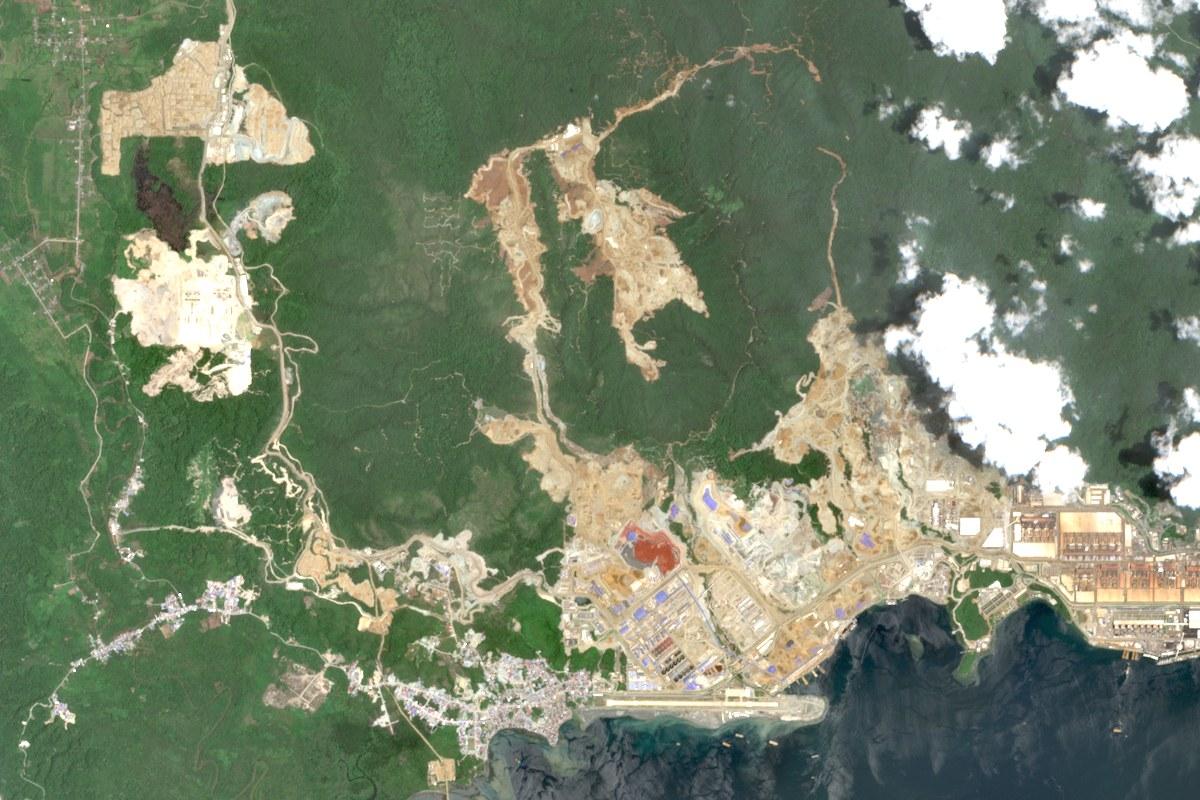
At the Weda Bay nickel area, in our Outlook tool for sustainability teams, forest-disturbance alerts covered 120 hectares in the six months to 30 April 2025 and 146 hectares in the six months to 31 October 2025. The six months to 30 April 2026 showed 404 hectares, more than double the half-year before, and the six months to 31 October 2026 showed 654 hectares.
A yearly supplier questionnaire would not have told a nickel buyer about either rise. In the tool you can set the month of your own yearly audit and see how many months earlier each change was visible from orbit.
Limits
Satellite monitoring cannot do what an auditor does. It cannot see inside a building, read a payroll, interview a worker or check a permit. It shows that something changed and does not show who caused it. Cloud and tree cover hide the ground, and some measures are weak at some sites. We do not predict incidents, and we do not say how likely one is.
Who uses this and for what
- Procurement and sustainability teams use monitoring to decide where audits go next.
- Audit and assurance teams use it to prepare a visit and to check a supplier's account.
- Companies with long supply chains use it for the sites their audit programme never reaches.
Questions buyers ask
Can satellite monitoring replace audits?
No. It cannot see people, documents or the inside of a plant. It covers the months between audits and the sites no auditor visits, and it gives the next audit a dated starting point.
Is a certified supplier still worth monitoring?
A certificate tells you a standard was met when the site was last audited. Monitoring tells you whether the site has physically changed since. Where forest loss matters, that second question stays open after certification.
What do we do when the record and the supplier's answer disagree?
Ask the supplier about the specific observation, with its date and image. There may be a good explanation, such as clearing by a neighbour. The record shows that something changed, and the supplier or an auditor can establish who was responsible.
Does the supplier know they are being monitored?
Not unless you tell them. The measurements need nothing from the supplier, and whether to tell them is your decision.
You can try this on real sites in the Outlook tool, ask for a first reading of a site of your own at Check a site, or read Supply chain risk monitoring companies compared: where satellite evidence fits.