 RondoTrace
Continuous supply chain risk monitoring
Last updated:
In short
Continuous supply chain risk monitoring means watching the sites your supply depends on throughout the year, so that a change is noticed when it happens and not at the next audit. RondoTrace does this with satellite measurements and public sources, and reports each change against the site's own history and its surroundings.
What continuous monitoring means
Most supplier risk work happens at fixed moments, such as an onboarding check, a yearly questionnaire or an audit every few years. Continuous monitoring fills the months between those moments. Each site is measured on a regular cycle, and each new reading is compared with what is normal for that site.
A site here is a physical place: a mine, a smelter, a plant, a tailings dam or a sourcing area. We monitor the place itself, which matters because one plant can supply several of your suppliers.
How it works in practice
You give us a list of sites, or supplier names and addresses that we resolve to sites. For each one we measure what applies there: forest loss, vegetation and surface water, air quality around the site, heat from furnaces and flares, built area and brightness at night, wet area on tailings facilities, and ground movement at embankments.
Each reading is set against the same site in earlier years and against the land around it. When something changes we tell you what changed, when, and how sure we are. We also read public sources, such as company statements and press reports, and show them beside the measurements with their dates. More than 120 sites are published in this form on our Public Ledger.
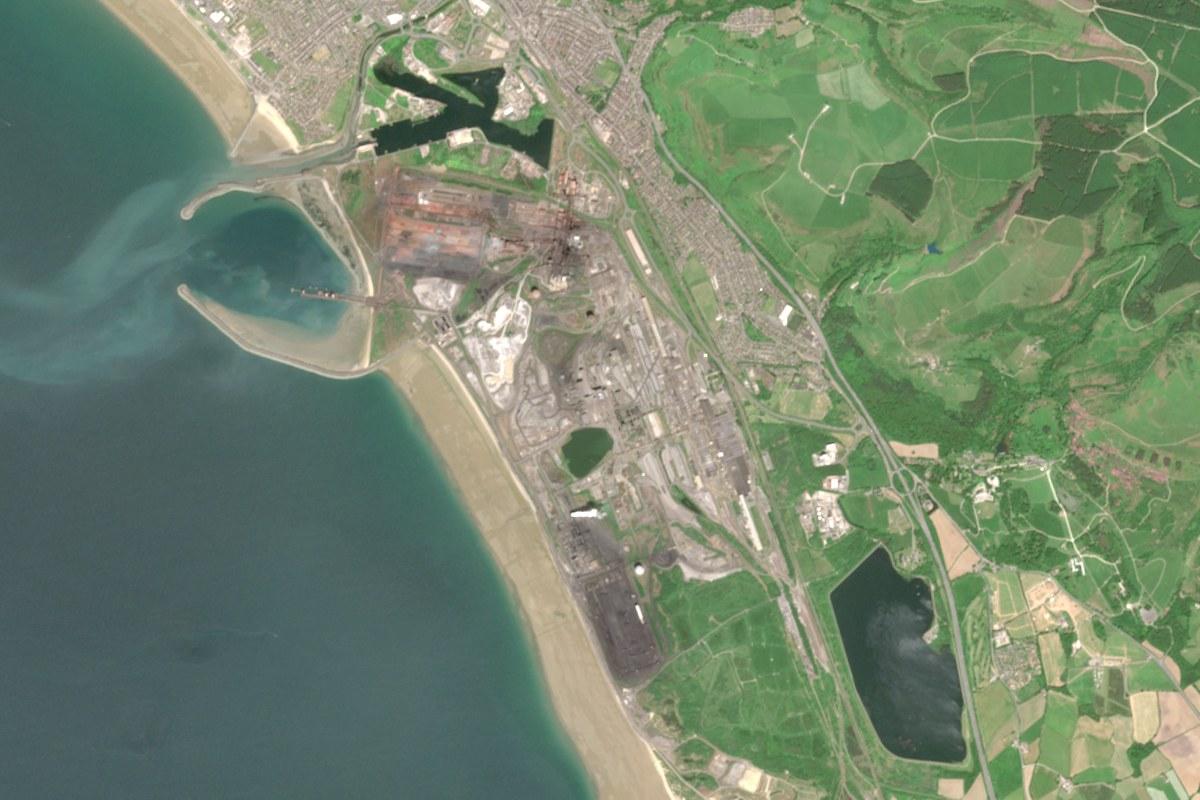
A worked example: Port Talbot steelworks
Port Talbot in the United Kingdom is one of the sites in our Outlook tool for insurers. In June 2023 we recorded 17 signs of heat from the furnaces, the most in any month of the record. July 2024 was the last month in which we saw any. In November 2024 the site became much dimmer at night, and the brightness reading fell from 24.6 in October to 5.9. By September 2026 we had seen no heat for 27 months.
The owner reported the closures as they happened, and ironmaking was reported to continue until 30 September 2024. We saw no heat in August or September 2024, because cloud hides this site on many days. A buyer of steel from these works would have had a dated, independent record of the change to set beside the announcements.
Limits
We do not predict incidents, and we do not say how likely one is. Monitoring tells you that something changed at a site and when. It does not tell you who caused it.
We cannot see inside buildings, and we cannot see workers, contracts or finances. Cloud and tree cover hide the ground, sometimes for weeks. A measure can be weak at a particular site, and where it is we say so on the page.
Who uses this and for what
- Procurement and supply chain teams use it to learn of a change at a supplier's site, or at a site further back in the chain, and to ask about it.
- Sustainability teams use it to see what has changed in a sourcing area since the last audit or questionnaire.
- Lenders and insurers use it to check that a financed or insured site is still what the file says it is.
- Regulators and site owners use it to decide where to look first.
Questions buyers ask
How often is a site measured?
It depends on the measure. In our public examples, heat and brightness at night are reported by month, forest loss and wet area by six-month period, and ground movement at an embankment a few times a month. Cloud can remove individual readings.
Does continuous monitoring replace supplier audits?
No. An audit sees documents, people and the inside of a plant, which we cannot. Monitoring covers the time between audits and the sites an auditor never visits. It can also help you decide where the next audit should go.
Can you monitor sites beyond our direct suppliers?
Yes, if the site is known. A mine or smelter several tiers back can be measured in the same way as a direct supplier's plant, and nobody at the site needs to take part.
Will you tell us before a disruption happens?
No. We do not predict incidents. We report measured changes, such as a furnace going cold or a wet area growing, with their dates and with what we believe they mean.
You can try this on real sites in the Outlook tool, ask for a first reading of a site of your own at Check a site, or read Supplier site monitoring by satellite.