 RondoTrace
Thirteen Months of Warnings
A forensic satellite analysis of the fatal explosion at US Steel’s Clairton Coke Works — and what it reveals about the gap in industrial ESG due diligence.
By RondoTrace · 24 April 2026 · 8 min read
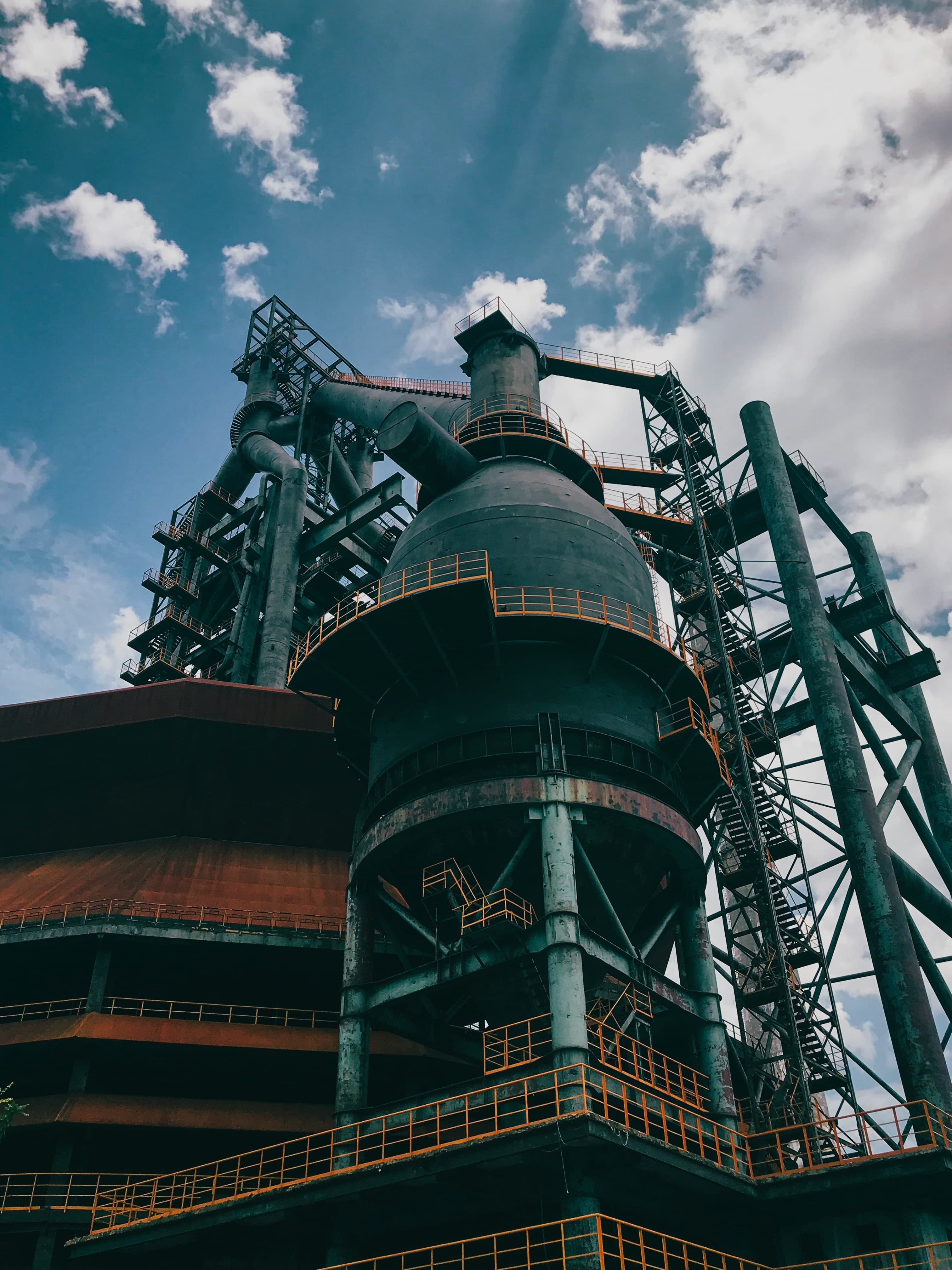
At 10:47 AM on Monday, 11 August 2025, an explosion tore through the Battery 13/14 transfer area at US Steel’s Clairton Coke Works. Two workers were killed. Ten others were injured. The blast was heard for miles and shattered windows across the town of Clairton. Clairton is the largest coke-making facility in the Western Hemisphere, sitting on the west bank of the Monongahela River fifteen miles south of Pittsburgh. On that Monday morning, a maintenance crew had been preparing to replace a damaged gas isolation valve — a 72-year-old cast iron component that had been flagged for replacement one month earlier. Other valves in the system were also known to be degraded. As the crew flushed the valve with water, built-up pressure split the valve body along a circumferential crack. Coke oven gas — the flammable mixture of hydrogen, methane, and carbon monoxide produced as a byproduct of heating coal at 2,000°F — escaped into the basement of the transfer area. It ignited less than one minute after workers were ordered to evacuate.
In the months after the incident, investigators identified a familiar pattern: ageing infrastructure, maintenance procedures that had not been updated to reflect current conditions, occupied buildings located within explosion hazard zones, and safety recommendations that had been rejected by management. A precursor incident six months earlier — a combustible material buildup in a different battery unit that injured two workers in February 2025 — had not triggered broader systemic review.
The operational degradation that led to the explosion had been visible from space for thirteen months.
What RondoTrace Analysed
We selected Clairton Coke Works as a forensic case study for three reasons. First, the facility is publicly known and the incident is well documented, allowing our findings to be shared openly. Second, the root cause — deteriorating gas containment systems in an ageing industrial facility — is a category of risk that is explicitly in scope for CSDDD due diligence and that traditional supplier questionnaires systematically fail to detect. Third, the event offers the clearest possible test of the central hypothesis RondoTrace was built around: that operational degradation at industrial facilities produces satellite-observable signatures long before it produces a catastrophic outcome.
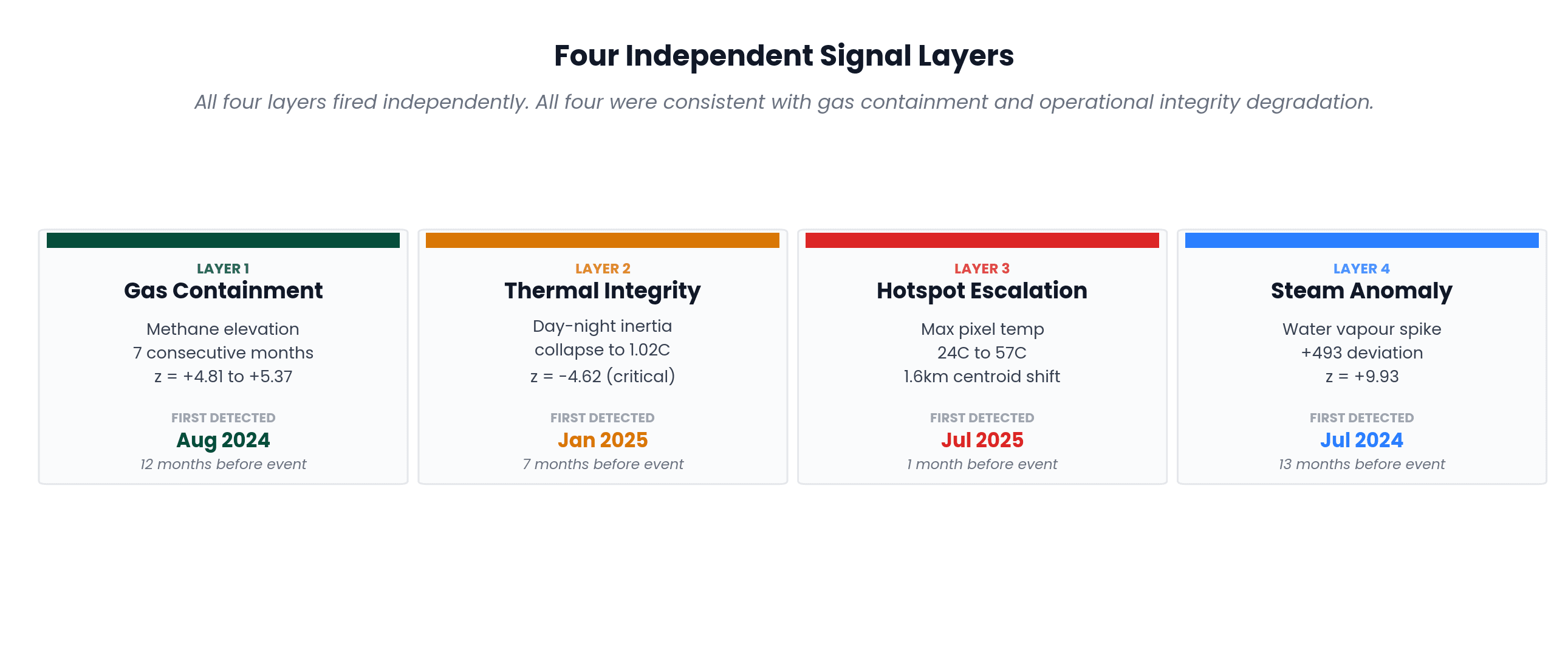
We processed twenty months of satellite data for the Clairton facility through our proprietary AI model, covering January 2024 through August 2025. The analysis spans four independent signal layers: atmospheric gas composition, thermal integrity, spatial heat mapping, and water vapour dynamics. Each layer uses a different instrument and a different physical principle — the signals cannot corroborate each other by accident.
All four layers fired. All four were consistent with the same underlying condition: progressive degradation of the facility’s gas containment and thermal management systems. The first signal appeared in July 2024 — thirteen months before the fatal explosion.
Signal 1: The Gas That Should Have Stayed Contained
A coke works produces coke oven gas as an intrinsic byproduct of its process. This gas is normally captured, processed, and partially reused as fuel for the ovens themselves. In a well-sealed facility, atmospheric methane concentrations above the site remain close to regional background.
Between January and July 2024, methane concentrations over the Clairton facility tracked the regional baseline consistently. In August 2024, that signature broke from baseline and did not return. For seven consecutive months — August 2024 through February 2025 — concentrations remained above the two-standard-deviation anomaly threshold, peaking in October 2024 at a z-score of +5.37. A deviation of this magnitude, sustained across this many independent measurement windows, cannot be explained by weather, seasonality, or regional transport. It is a direct signature of compromised gas containment.
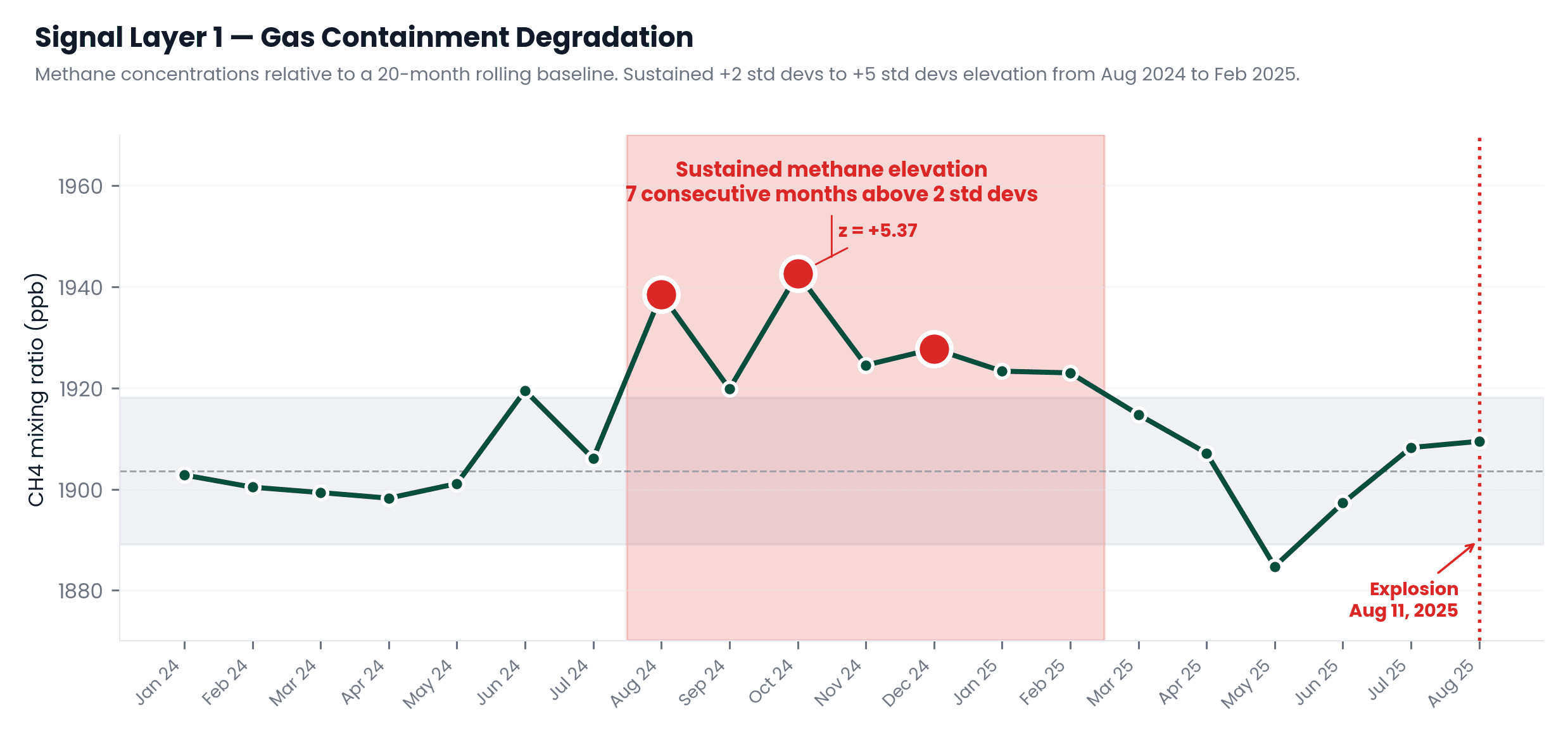
Seven consecutive months of methane elevation at a coke works is not seasonal variation. It is gas that should have been contained, escaping.
Signal 2: The Month the Facility Went Dark
Coke oven batteries maintain temperatures of approximately 2,000°F continuously. Because this heat is generated internally rather than absorbed from the sun, a functioning coke works displays a distinctive thermal signature: a sustained day-night temperature differential of six to thirteen degrees Celsius, far smaller than the surrounding landscape because the facility is hot both day and night.
In January 2025, that signature collapsed. The day-night differential at the Clairton facility dropped to 1.02°C — a z-score of negative 4.62 against its own historical baseline, and categorically outside the operating envelope of any coke works running at normal capacity. The interpretation is direct: the facility was no longer generating its own heat signature. Either the batteries were substantially offline, or heat was being lost to the atmosphere at rates inconsistent with normal operation.
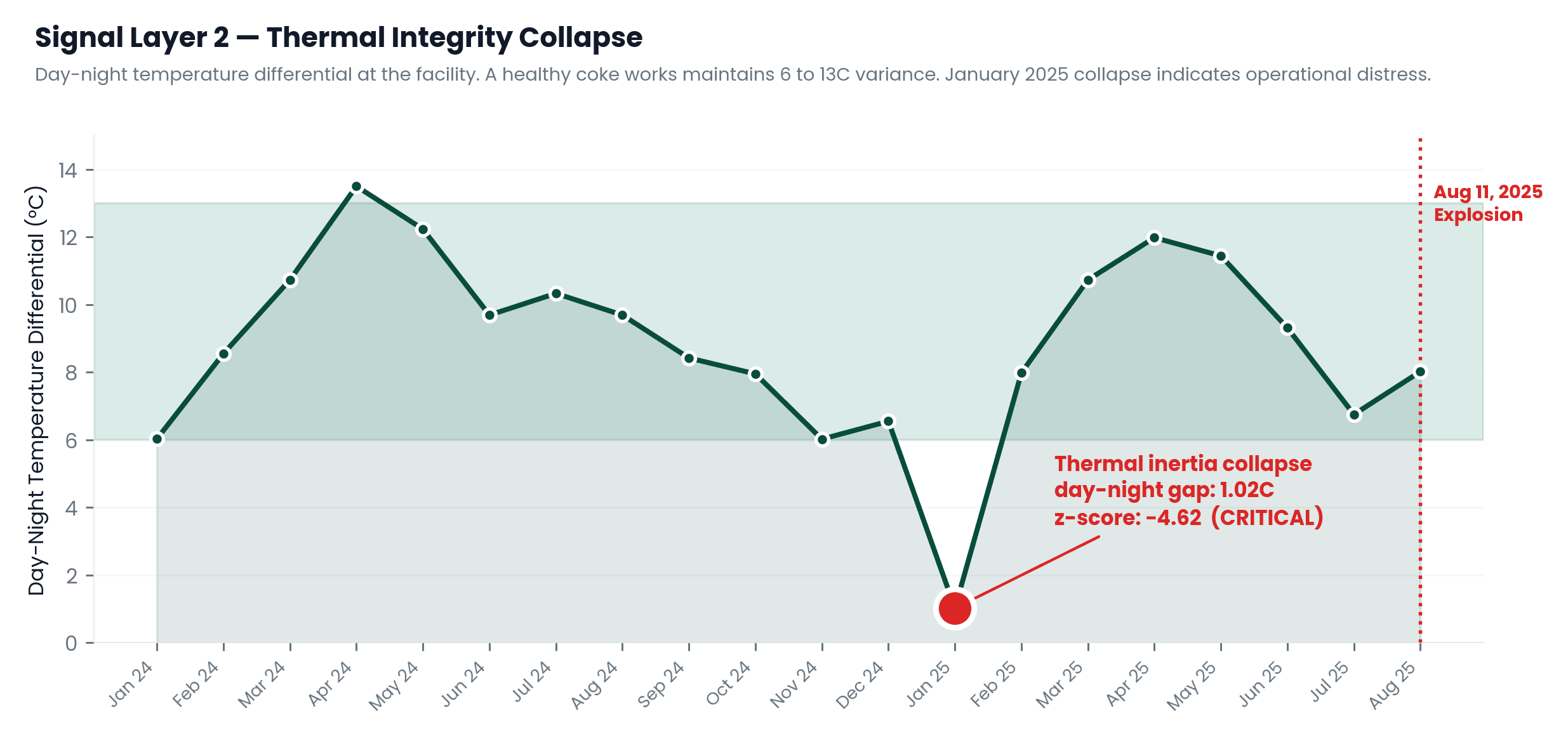
The thermal collapse coincided with another signal: nighttime radiance over the facility spiked to 20.8 against a monthly mean of 11.6 — the brightest nighttime reading in the entire analysis period. A facility operating below thermal baseline while simultaneously showing elevated nighttime lighting indicates intensive maintenance activity taking place outside normal operating conditions. This pattern is consistent with the precursor incident that occurred in the same month — the combustible material buildup that injured two workers on February 7, 2025.
Signal 3: The Hotspot That Moved
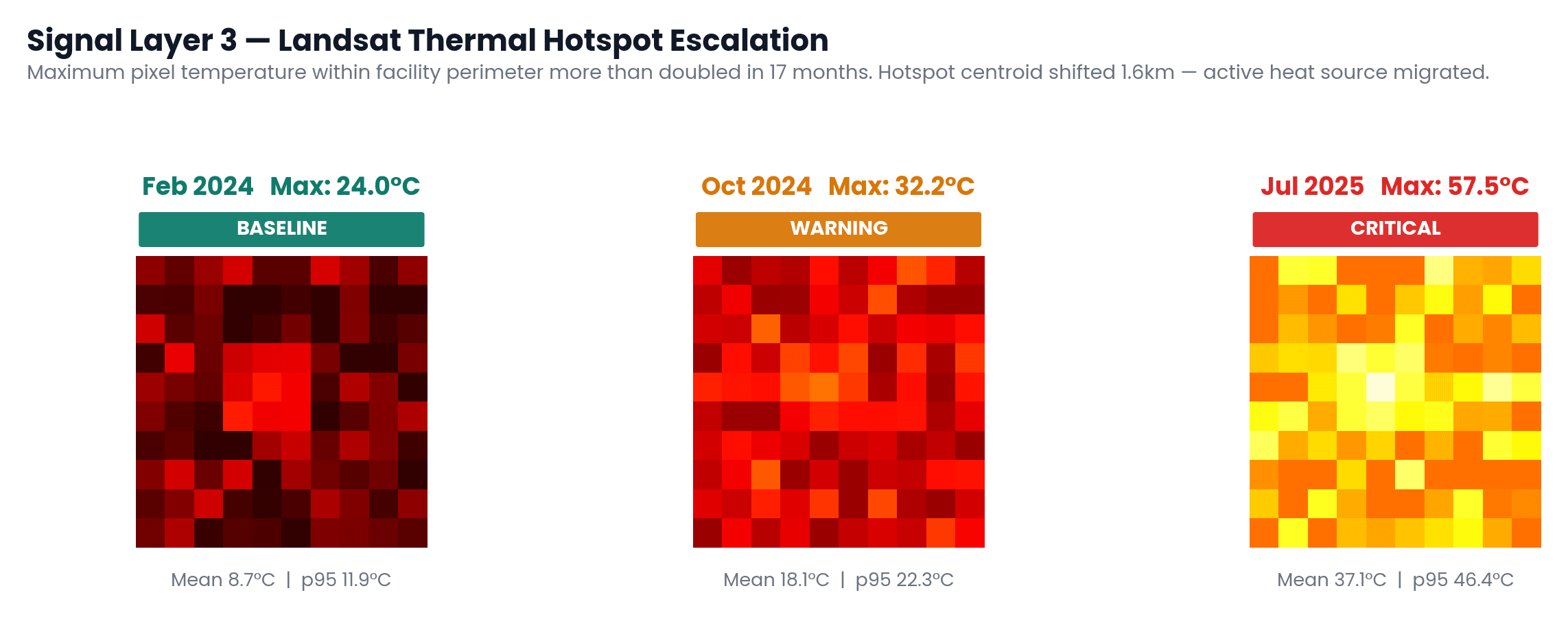
High-resolution thermal imagery allows us to map the spatial distribution of heat within an industrial facility. Three snapshots of Clairton — February 2024, October 2024, and July 2025 — tell a clear story.
In February 2024, the facility’s thermal footprint was diffuse and consistent with normal operations. Maximum pixel temperature sat at 24°C. Eight months later, maximum temperatures had climbed to 32°C, concentrated more tightly around the battery zone. This corresponds to the onset period of the methane anomaly.
By July 2025, one month before the explosion, the facility’s thermal signature had transformed. Maximum pixel temperature reached 57.5°C — more than double the February 2024 baseline. The 95th percentile temperature climbed from 12°C to 46°C. The centroid of the hottest zone shifted 1.6 kilometres within the facility, indicating that the primary source of the anomalous heat had migrated.
Active heat sources do not normally move within a coke works. When they do, it is because something that should be contained is no longer contained.
Signal 4: The First Warning
The earliest signal we detected at Clairton was neither thermal nor chemical. It was meteorological — a single month in which the facility’s water vapour column significantly exceeded matched geographic controls. In normal operation, an industrial surface shows lower atmospheric water vapour than surrounding vegetated land. The Clairton site exhibited this expected negative deviation in nineteen of the twenty months analysed.
The exception was July 2024, when the site deviation jumped to +493 units — a z-score of +9.93. This is an extreme outlier consistent with abnormal steam release, cooling water discharge outside normal operating parameters, or moisture contact with superheated surfaces. The anomaly did not recur. It was, in retrospect, the facility’s earliest operational stress signal in the thirteen months preceding the explosion.
The Composite Picture
Individual satellite signals can produce false positives. A single methane spike might reflect weather. A single thermal reading might reflect cloud cover. Our value does not come from any one sensor — it comes from the proprietary AI model that integrates multiple independent signal layers into a single Composite Operational Risk Score. Signals that corroborate each other across different physical principles elevate the score. Signals that contradict each other suppress it.
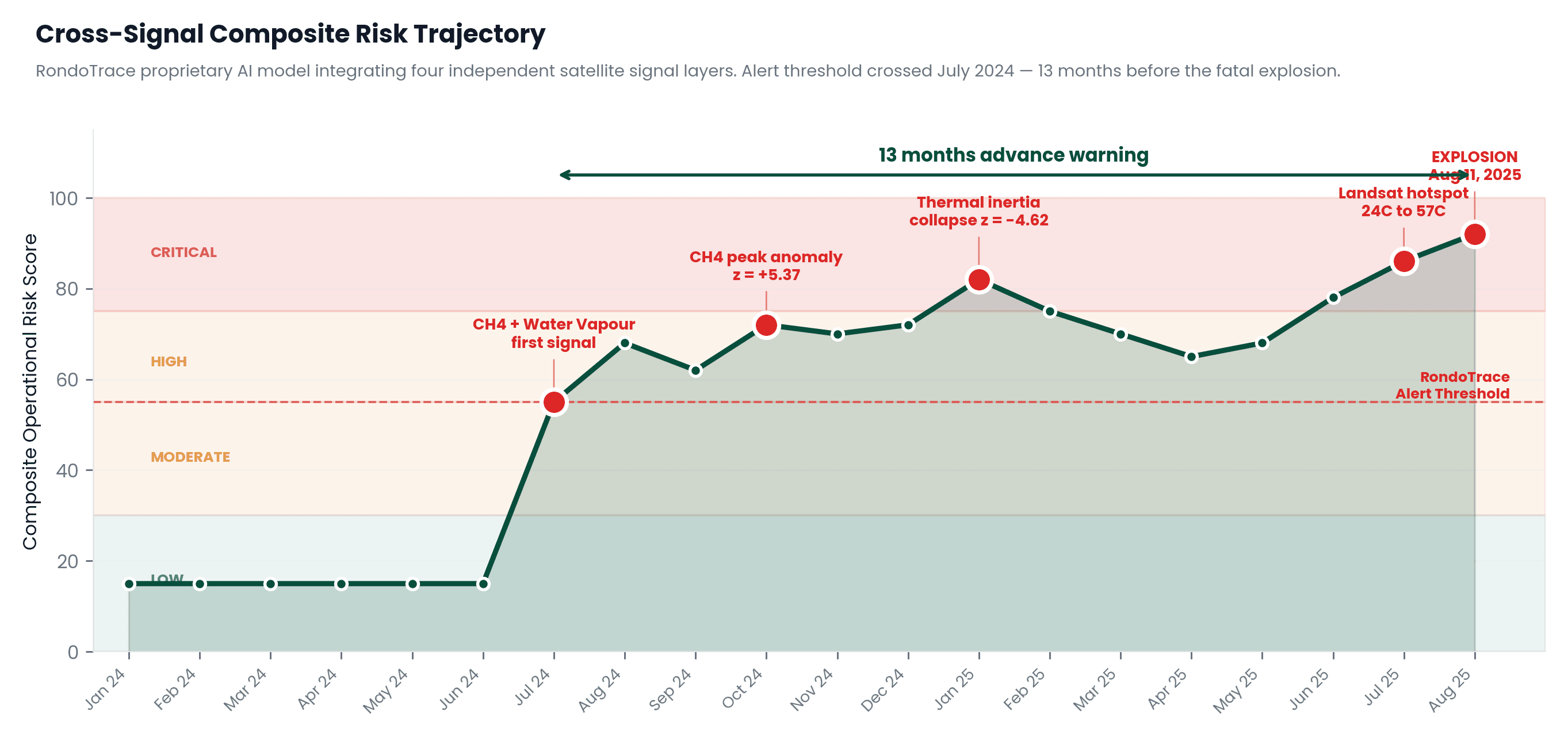
At Clairton, the composite score crossed the alert threshold in July 2024 and stayed elevated for the entire thirteen-month window preceding the explosion. Every major signal spike in the underlying data produced a corresponding jump in the composite score. No individual reading was ambiguous. The pattern was unmistakable.
What This Means for ESG Due Diligence
We do not claim to predict individual events down to the minute. Satellite data does not identify which specific valve will fail during which specific maintenance procedure. What it does identify — with a precision that traditional due diligence cannot match — is the systemic degradation that makes catastrophic events more likely.
Had a European industrial buyer been monitoring Clairton Coke Works through the RondoTrace platform, a Layer 1 alert would have fired in July 2024 on the water vapour anomaly. A Layer 2 alert would have followed in August 2024 as methane began to rise. By October 2024, the platform would have been issuing sustained gas containment warnings. By January 2025, the composite score would have entered the critical zone following the thermal inertia collapse. By July 2025, one month before the explosion, the Landsat hotspot escalation would have triggered a supply contingency recommendation.
A procurement or ESG team receiving these alerts would have had thirteen months to act. They could have requested supplier documentation of valve maintenance schedules. They could have commissioned an independent audit. They could have diversified sourcing away from the facility. They could have engaged directly with the operator to understand why the operational signatures were deviating from baseline. None of these responses would have required insider information or proprietary facility data. They would have required only one thing: a continuous, independent, satellite-based view of what was physically happening at the supplier site.
This is the gap that continuous satellite monitoring closes. Traditional supplier questionnaires, third-party audits, and news monitoring produced no signal during the thirteen-month precursor window at Clairton. Every piece of evidence about the facility’s degrading condition that is now available to investigators was already visible from orbit — but only to an observer equipped to see it.
The European Corporate Sustainability Due Diligence Directive will require in-scope companies to take “appropriate measures” to identify, prevent, and mitigate adverse human rights and environmental impacts across their chains of activity. The question facing every compliance team is not whether continuous satellite monitoring will eventually become part of that standard. The question is whether their portfolio will be ahead of the standard, or scrambling to catch up with it.
The question is not whether the explosion could have been predicted to the minute. The question is whether the degradation that led to it was invisible. It was not. It was sitting in a signal archive, waiting to be read.
The operational degradation that led to the explosion had been visible from space for thirteen months.
— RondoTrace forensic analysis
Related analysis
Other cases in the record.


The same methodology, applied to a site you choose.
Forensic retrospective on any supplier site — including yours. We deliver the methodology, the imagery, the dated observations, and the limitations. Thirty days, no commitment.